
- August 12, 2026
- Posted by: webmaster
- Category: Blog
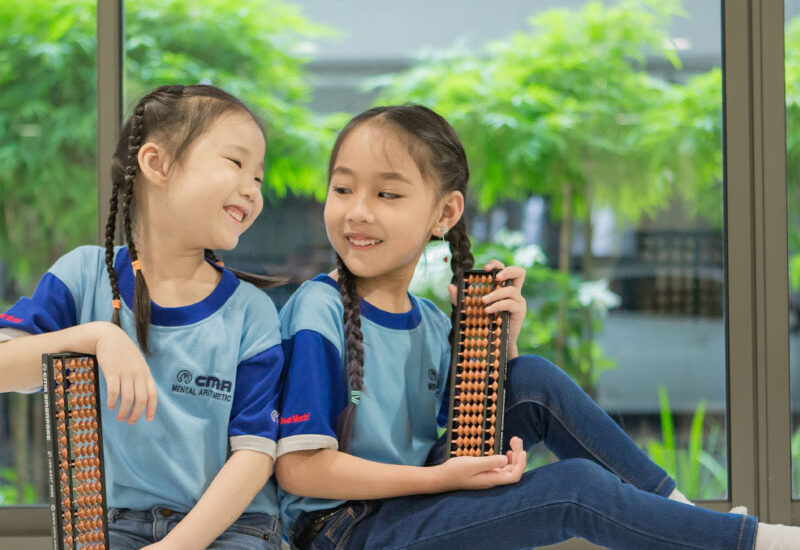
One of the most common questions parents ask before enrolling their child in abacus class in Singapore is a simple one: when should we start? The answer depends on more than just age. It involves understanding how the brain develops at different stages of childhood and what kind of learning each stage is most receptive to.
This guide breaks down the key age ranges for abacus learning, what each stage focuses on developmentally, and how the timing of when a child starts can shape the benefits they experience over the long term.
Why Starting Age Matters in Abacus Learning
The brain is not equally receptive to all types of learning at every age. During early childhood, the brain forms neural connections at a significantly faster rate than at any other point in life. This period of heightened brain flexibility, often referred to as neuroplasticity, means that structured cognitive experiences during the early years tend to have a deeper and longer-lasting effect than the same experiences introduced later.
This is not to say that older children cannot benefit from abacus training. They absolutely can. But children who begin earlier tend to accumulate a compounding advantage over time, building attention, memory, and numerical thinking at the stage when the brain is most ready to absorb them.
Ages 3 to 4.5: The Kindy Stage
At this age, children are in the earliest phase of structured learning readiness. Their attention spans are short, their world is largely sensory, and they learn most naturally through play, songs, movement, and repetition.
CMA Singapore’s Kindy Programme is designed to uncover and nurture potential in mental arithmetic from a very young age. Classes are conducted in a fun and stress-free environment, where children participate in songs and physical activities that build confidence in learning gradually and positively. The programme focuses on three clear objectives: helping children understand number concepts from 0 to 9 and develop number writing ability, learning the structure of the abacus and acquiring the correct fingering techniques, and beginning to memorise basic addition and subtraction formulae.
Class sizes are kept to a maximum of 8 students, ensuring every child receives ample personalised attention. Each session runs for 1 hour per week.
Ages 4.5 to 6: The Kinder Stage
By this stage, children have developed greater capacity for following instructions, maintaining short periods of focused attention, and retaining simple sequences. Before enrolment, children should be able to understand, read, and write numbers 0 to 9. A diagnostic test is also given to each child to determine their readiness for the programme, ensuring the starting point is appropriate for where they are developmentally.
The Kinder Programme runs in terms of 10 weeks, with weekly sessions of 1.5 hours each. The objectives at this stage move into more structured abacus technique, including becoming familiar with the concept of dual-hand abacus mental arithmetic, learning the correct posture and method of holding and moving beads, applying basic arithmetic formulae of addition and subtraction on the abacus, and building speed and accuracy in performing a series of calculations with increasing difficulty.
Ages 7 to 13: The Primary Stage
Children in primary school have significantly longer attention spans, stronger working memory, and the ability to apply learned methods independently. CMA Singapore’s Primary Programme uses an ability-based approach, meaning participants may begin at different starting points but will progress along the same structured platform over time.
Students advance through Foundation, Intermediate, and Advanced levels before ultimately working toward the Dan Levels, which represent the highest tier of the programme. The objectives at this stage include mastering the dual-hand bead stirring methodology, using skills from foundational levels to project an imaginary abacus in the mind, visualising that mental abacus to perform different types of mathematical calculations entirely in their heads, and training in both the Abacus Arithmetic (AB) and Mental Arithmetic (MA) components across all levels.
Each term runs for 10 weeks with weekly sessions of 1.5 hours each.
Not Sure Which Programme Fits Your Child? TSC Education Lab Might Be the Answer
For some children, particularly those who are not yet confident with basic mathematics concepts, a direct entry into abacus training may feel like a bigger step than they are ready for. This is where TSC Education Lab comes in.
TSC Education Lab’s programme available at CMA’s Yishun, Canberra, and Tampines branches takes a story-based approach to building mathematical foundations before progressing into abacus and mental arithmetic training. Rather than starting with calculation, TSC uses storytelling to introduce concepts such as shapes, numbers, and basic mathematics ideas in a way that feels natural and accessible to young learners. Once those foundations are in place, children move into abacus and mental arithmetic training, combining school mathematics concepts with calculation skills into a single, cohesive learning journey.
If your child is comfortable with numbers and simply needs to build calculation speed, CMA’s abacus programmes are the natural starting point. If your child needs to first develop confidence with mathematics concepts before moving into arithmetic training, TSC Education Lab offers a gentler and more structured path to get there.
Parents interested in finding out more about TSC Education Lab can enquire directly at the Yishun, Canberra, or Tampines branches.
Earlier Is Better, But Any Time Is a Good Time
The developmental research on early learning consistently supports the view that earlier structured cognitive engagement produces stronger long-term outcomes. This is true across many domains of learning, and abacus training is no exception.
However, the most important factor is not when a child starts. It is whether they are in a programme that is well-matched to their developmental stage, delivered in an environment where they feel supported, and given enough time and consistency to build real skills.
If your child is 3 years old, starting now gives them the longest possible runway for growth. If your child is 10 and has never tried abacus training, starting now is still a worthwhile investment in their cognitive development and numerical confidence.
Final Thoughts
Choosing the right abacus class in Singapore is as much about finding the right programme for your child’s age and stage as it is about finding the right time to begin. CMA Singapore offers structured, age-appropriate programmes for children from 3 to 13 years old, designed to meet each child where they are developmentally and grow with them over time.
If you are ready to find out which programme is the right fit for your child, visit our centres or reach out to our team directly for a consultation.
Frequently Asked Questions (FAQ)
Q1. What is the difference between abacus arithmetic and mental arithmetic?
Abacus arithmetic refers to performing calculations using the physical abacus tool, where children move beads to work through addition and subtraction. Mental arithmetic is the advanced stage where children visualise an imaginary abacus in their minds and perform calculations entirely without the physical tool. CMA’s Primary Programme trains children in both components across its different levels.
Q2. Does my child need to know maths before starting abacus class in Singapore?
It depends on the programme stage. For the Kindy Programme, no prior knowledge is required as the focus is on introducing number concepts from 0 to 9 in a play-based environment. For the Kinder Programme, children should be able to understand, read, and write numbers 0 to 9, and a diagnostic test is conducted to confirm readiness before enrolment.
Q3. How many levels are there in CMA Singapore’s abacus programme?
CMA Singapore’s Primary Programme progresses through Foundation, Intermediate, and Advanced levels, with students ultimately working toward the Dan Levels, which represent the highest tier of achievement. The Kindy and Kinder programmes each serve as preparatory stages leading into this broader level structure for primary school-aged children.
Q4. Is abacus class in Singapore suitable for children who are already strong in maths?
Yes, abacus class benefits children at all ability levels because it trains cognitive skills like concentration, processing speed, and mental visualisation rather than subject content alone. Children who are already strong in maths often find that abacus training significantly improves their calculation speed and mental agility, which supports performance in more advanced mathematical work as they progress through school.
Q5. My child completed the Kindy Programme. Do they automatically move to the Kinder Programme?
Progression from the Kindy Programme to the Kinder Programme is based on readiness rather than automatic advancement. Since the Kinder Programme requires children to be able to understand, read, and write numbers 0 to 9, and includes a diagnostic assessment before enrolment, parents should check with their CMA centre to confirm their child’s readiness and the appropriate next step after completing Kindy.