
- November 6, 2026
- Posted by: webmaster
- Category: Blog
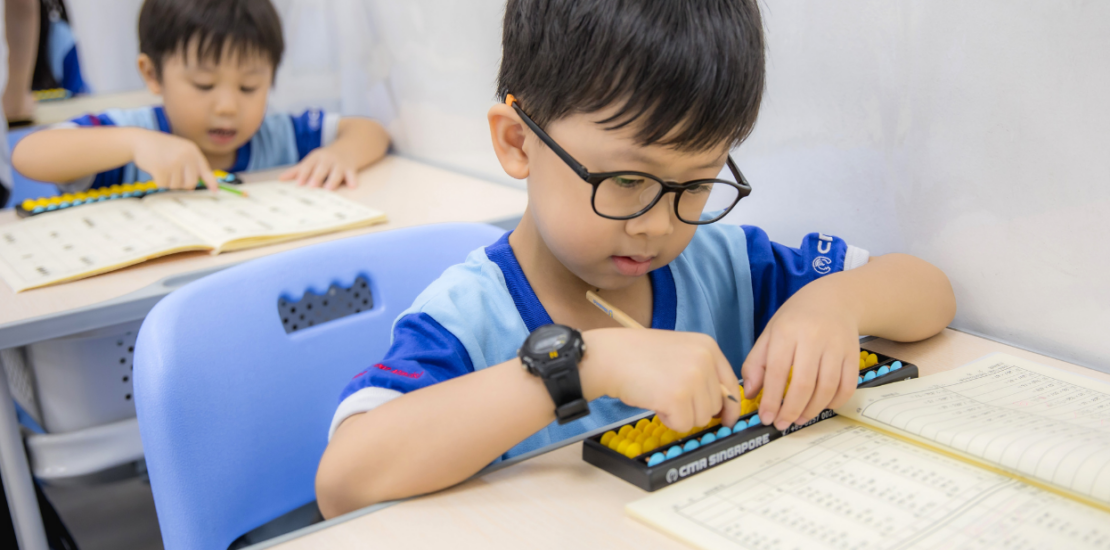
For many Singapore parents, the upper primary years bring a sharper focus on the PSLE subjects: English, Mathematics, Mother Tongue Language and Science. Tuition is a natural and often valuable response. But a quieter question sits underneath every study session: is my child able to take in what is being taught?
Learning depends on a child’s ability to pay attention, listen carefully and process information at a steady pace. These skills sit underneath every subject, and they can be developed.
Is Tuition Enough to Prepare a Child for PSLE?
Tuition plays a useful role. A good tutor clarifies difficult topics, introduces exam techniques and gives children focused practice with the syllabus. For many families, it is a sensible part of PSLE preparation.
What tuition cannot do on its own is make a child more attentive. A tutor can explain a concept clearly, but the child still has to listen, hold the steps in mind and apply them independently. When focus is inconsistent, the same lesson may land differently from one week to the next. That is not a reflection of the tutor or the child’s ability, but of how much the child could take in at that moment.
Why Does Focus Affect How Well a Child Learns?
Focus is the starting point of learning. Information a child does not attend to cannot be remembered, practised or applied later. In a typical primary school day, children are expected to follow multi-step instructions, stay on task through lessons and keep working accurately as a paper gets longer.
Child development research generally describes attention as a skill that grows with age and responds to experience and practice. This is why attention training for kids is worth considering alongside academic support: it works on the capacity that every other kind of learning relies on.
How Does Processing Speed Matter in PSLE Papers?
Processing speed is how quickly and accurately a child can take in information and respond. PSLE papers are timed, and Mathematics Paper 1 does not allow calculators. A child who handles numbers and instructions efficiently has more time and mental energy left for checking work and tackling harder questions.
Slower processing does not mean a child lacks ability. It often means a child is spending more effort on the basics, leaving less capacity for reasoning. Regular, structured practice can help ease that load over time.
What Signs Suggest Focus May Be Holding a Child Back?
Parents may notice patterns such as:
- Needing frequent reminders to return to homework
- Understanding a topic in discussion but making inconsistent errors in written work
- Losing track of multi-step instructions
- Becoming tired or frustrated during longer papers
- Performing below their knowledge under timed conditions
On their own, these patterns do not point to a clinical condition. If concerns are significant or persistent, a school counsellor or paediatrician can offer a proper assessment. For many children, building focus through structured practice is a sensible, low-risk step.
What Is Focus Training for Kids and How Does It Work?
Focus training for kids uses regular, effortful activities that require a child to hold attention voluntarily, with difficulty rising as their capacity grows. Unlike passive activities that hold attention automatically, these tasks ask the child to concentrate, recall a method and produce an accurate result.
Abacus mental arithmetic is one structured example. Each session combines listening, visual tracking, memory and timed calculation, which makes it an active exercise for attention rather than a content lesson.
How Does CMA Help Children Build Focus?
Our abacus mental arithmetic programmes at CMA Singapore are not a replacement for school or tuition, and we do not teach the PSLE syllabus. Our purpose is to develop the mental skills that make learning more effective. We sum up our outcomes as BRAIN, five areas that connect directly to the school context:
- Better Focus (Abacus Arithmetic): each session asks for sustained concentration, with difficulty increasing as the child advances through levels.
- Rapid Processing (Mental Arithmetic): timed practice builds the ability to handle numbers and information quickly and accurately.
- Active Listening (Aural Mental Arithmetic): children respond to spoken numbers, strengthening how well they take in what they hear.
- Increase Memory Power (Mental Visualisation): picturing an imaginary abacus gives memory a regular workout.
- Nurtured Discipline (Timing Challenge): working within time limits helps children learn to stay steady and disciplined.
Because progression is ability-based, children advance when they are ready, so the challenge stays appropriate. Our programmes run from age 3 through to 13, and starting earlier gives children more time to build these habits well before the PSLE years.
How Long Before Parents Notice Better Focus?
Improvement is gradual and varies from child to child. Early changes tend to show in everyday behaviour first, such as completing homework with fewer reminders or staying with a task for longer, before they appear in school results. Age, starting point and how consistently a child attends and practises all influence the pace, so it is more realistic to look for steady progress over several months than a quick change.
How Can Parents Support Focus at Home?
Structured classes work best when everyday routines support them. A few practical habits help most children:
- Protect sleep. Tired children find it much harder to concentrate.
- Keep a regular study routine. A consistent time and a quiet, clutter-free space make it easier to settle.
- Use short breaks. Brief pauses between study blocks help children return to work with fresh attention.
- Balance screen time. Passive viewing right before homework can make it harder to settle into effortful tasks.
- Keep the schedule sustainable. Time for rest and play matters, so a few well-chosen activities attended consistently usually serve a child better than a packed timetable.
These habits do not replace tuition or enrichment. They help a child get more from both.
Final Thoughts
PSLE preparation is not only about how much a child studies, but how well they can take in and use what they learn. Tuition supports the content. Focus supports everything else.
If you would like to explore how your child’s focus can be developed alongside their schoolwork, visit one of our centres and our team will help you find the programme that suits your child’s age and stage.
Frequently Asked Questions (FAQ)
Q1: What is the best age to start focus training for kids?
Children can begin as early as age 3. Our Kindy Programme is designed for ages 3 to 4.5, using songs, physical activities and an introduction to the abacus in a stress-free setting with a maximum of 8 students per class. Starting early gives children more time to build focus habits gradually.
Q2: How does abacus mental arithmetic compare with music or sports for building focus?
All three can build focus, and each suits different children. Music and sports develop coordination, discipline and teamwork, while abacus mental arithmetic adds timed numerical practice, visual tracking and listening in one session. Many families combine them, as long as the schedule leaves room for rest and play.
Q3: Can my child attend tuition and CMA classes at the same time?
Yes, the two serve different purposes and can run side by side. Our abacus mental arithmetic programme builds mental skills such as focus and processing speed, while tuition covers subject content. Check that the weekly timetable still leaves your child enough time to rest and play.
Q4: Will abacus training improve my child’s PSLE results?
We cannot guarantee exam results, and our programmes do not teach the PSLE syllabus. What they build is focus, listening and processing speed, which support how a child learns and works under timed conditions. Results still depend on many factors, including school learning, revision habits and any tuition support.
Q5: How can parents tell if attention training for kids is working?
Look for everyday changes such as completing homework with fewer reminders, following multi-step instructions more reliably and staying with a task for longer. Progress through ability-based levels and feedback from the trainer give further signals. Change is usually gradual, so judge progress over several months rather than a few weeks.