
- July 1, 2026
- Posted by: webmaster
- Category: Blog
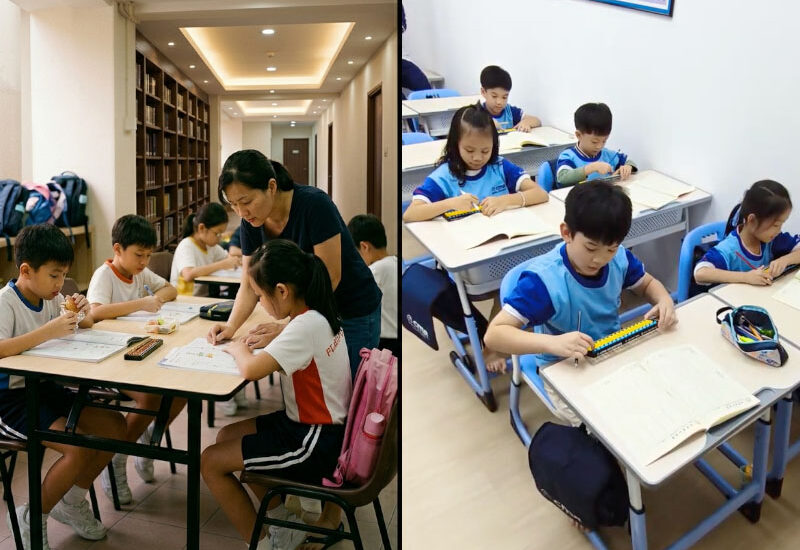
Many parents in Singapore use the terms “enrichment class” and “student care” interchangeably, but the two serve very different purposes for your child. If you are trying to decide where your child should spend their after-school hours, understanding this distinction can save you a lot of second-guessing and help you make a more informed choice.
Here is a clear breakdown of both options so you can plan with confidence.
What Is Student Care?
Student care centres, sometimes referred to as Student Care Centres (SCCs), are structured programmes that provide supervision for primary school children after school hours. They are regulated by the Ministry of Social and Family Development (MSF) in Singapore, and centres must be licensed under the Child Care Centres Act.
The primary purpose of student care is pastoral and supervisory. Children are looked after while their parents are at work. A typical student care programme includes:
- Assistance with school homework and assignments
- A light snack or meal
- Supervised free time or play
- Basic character development activities
Student care is designed to ensure that children are safe, fed, and have completed their schoolwork by the time parents return home. It is a well-organised environment, but its focus is on care and daily academic support rather than active skill development.
What Are Kids Enrichment Classes?
Kids enrichment classes in Singapore are purposefully designed to build specific cognitive, creative, physical, or academic skills in children. They go well beyond homework supervision and standard school curriculum. The goal is to actively develop a child’s abilities, interests, and long-term potential in a focused area.
Common categories of kids enrichment classes in Singapore include:
- Mental arithmetic and abacus training
- Language and literacy programmes (English, Mandarin, Malay)
- Music, arts, and creative expression
- Sports and physical development
- Coding and STEM-based learning
- Public speaking and communication
Among these, abacus mental arithmetic is one of the longest-standing and most research-supported forms of enrichment for children in Asia. Rather than simply drilling numbers, abacus training works by teaching children to visualise and manipulate a mental abacus image in their minds. Over time, this trains both the left and right hemispheres of the brain simultaneously, building concentration, working memory, and numerical intuition that benefit children well beyond mathematics.
Unlike student care, enrichment classes are chosen based on the specific skills parents wish to develop in their child and are not regulated by MSF as a childcare service.
The Key Differences at a Glance
| Student Care | Enrichment Classes | |
| Primary purpose | Supervision and care | Skill and talent development |
| Regulated by | MSF (licensed) | Not MSF-regulated as childcare |
| Curriculum | Homework help, basic activities | Specialised programme per subject |
| Age focus | Primarily primary school age | Varies widely, some start from 3 years old |
| Frequency | Daily (after school) | Weekly or as scheduled |
| Outcome | Safe, supervised environment | Measurable skill progression |
Can You Do Both?
Absolutely. In fact, many Singapore families combine student care with one or two kids enrichment classes during the week. Student care handles the daily after-school routine, while enrichment classes fill in the gaps with deliberate skill-building that the school day simply does not have time for.
For example, a child might attend student care from Monday to Friday for homework supervision and meals, and join an abacus mental arithmetic class on Saturday mornings. Over months of consistent weekly practice, that child develops the ability to perform multi-digit calculations mentally, often faster than a peer relying on a calculator. More importantly, the concentration and memory habits built through abacus training carry over into every other subject at school.
Which One Does Your Child Actually Need?
The honest answer is that most children benefit from both, but they serve entirely different needs.
If your main concern is supervision and making sure your child is cared for while you work, student care is the practical solution. It handles the logistics of your child’s weekday routine in a reliable and structured way.
If your goal is to give your child a developmental edge, to nurture specific strengths, or to prepare them for the demands of Singapore’s academic environment, then kids enrichment classes are where meaningful growth happens. The best enrichment programmes are built around a child’s learning stage and developmental readiness, not just their school year.
For younger children between the ages of 3 and 6, this window is particularly important. Early childhood is widely recognised as the most responsive period for cognitive skill development. Programmes like abacus mental arithmetic that start during kindergarten years take advantage of this window by introducing structured, multi-sensory learning at a time when the brain is most receptive to forming strong numerical and concentration foundations.
Children who begin abacus training at this stage typically progress through levelled modules at their own pace, building confidence gradually rather than being pushed to perform. By the time they reach primary school, many find that mental calculations, attention span, and even reading comprehension have all improved as a result.
Choosing the Right Enrichment Class in Singapore
When evaluating kids enrichment classes in Singapore, here are a few practical questions to ask:
- Is the curriculum structured with clear progression levels?
- Are class sizes small enough for personalised attention?
- Does the programme offer both in-person and online learning options?
- Is there a proven track record, including student achievements or independent research on the programme’s effectiveness?
- At what age can my child start, and how long does the programme run?
For abacus mental arithmetic specifically, look for a programme that uses a dual-hand abacus approach, as this is known to activate both sides of the brain more effectively than single-hand methods. Class sizes should be small enough for the trainer to monitor each child’s progress closely, since ability-based advancement works best with personalised attention.
A well-designed enrichment class should give you visible progress updates and allow your child to grow at their own pace. This is especially important for programmes targeting cognitive development, where consistent, structured practice leads to the best long-term outcomes.
Final Thoughts
Student care and kids enrichment classes in Singapore are both valuable, but they are not the same thing. Student care keeps your child safe and supported through the school week. Enrichment classes actively invest in who your child is becoming.
Whether your child gravitates toward language, music, sports, or the focused mental discipline of abacus arithmetic, the right enrichment class is one that builds real skills, grows their confidence, and gives them something to look forward to every week.
If you are considering abacus mental arithmetic as part of your child’s enrichment journey, CMA Singapore has been one of the most established abacus mental arithmetic centres in Singapore, offering structured programmes for children from as young as 3 years old. With a curriculum built around whole-brain development and ability-based progression, it is a considered choice for parents who want their child’s enrichment hours to count toward something lasting.
Frequently Asked Questions (FAQ)
Q1: What is the difference between mental arithmetic and abacus training?
Abacus training and mental arithmetic are closely connected but represent two stages of the same learning journey. Abacus training begins with a physical abacus, where children learn to move beads to perform calculations. Mental arithmetic is the advanced stage where children no longer need the physical tool and instead visualise the abacus in their minds to compute numbers quickly and accurately. Most structured programmes, including those offered at dedicated abacus centres in Singapore, progress children through both stages as part of a single curriculum.
Q2: At what age should my child start enrichment classes in Singapore?
There is no single correct age, as it depends on the type of enrichment and your child’s readiness. That said, many cognitive enrichment programmes in Singapore accept children from as young as 3 years old, as early childhood is considered an optimal window for foundational skill development. Programmes such as abacus mental arithmetic are specifically designed with age-appropriate modules for children starting from the kindergarten years, allowing learning to be introduced gradually and in a stress-free environment.
Q3: How do I know if my child is ready for abacus mental arithmetic?
Most children who can follow simple instructions, sit and focus for short periods, and have basic familiarity with numbers are ready to begin. You do not need your child to be exceptional at maths before starting. In fact, abacus mental arithmetic is often recommended precisely for children who need to build number confidence from the ground up. Reputable centres in Singapore typically offer trial classes or assessments so parents can gauge their child’s comfort level before committing to a programme.
Q4: Can my child attend enrichment classes if they are already in student care full time?
Yes, and this is a common arrangement among Singapore families. Student care typically runs on weekday afternoons, while many kids’ enrichment classes schedule their sessions on weekday evenings or Saturday mornings to accommodate school and care routines. It is worth checking with both your student care centre and your chosen enrichment provider to ensure the timing does not create an overly long or tiring day for your child, particularly for younger primary school children.
Q5: Are enrichment classes still relevant given Singapore’s move toward student well-being?
Yes, and the two goals are not in conflict when enrichment is chosen thoughtfully. Singapore’s Ministry of Education has placed a growing emphasis on holistic development and reducing excessive academic pressure, particularly through initiatives like the PSLE scoring revisions and the SkillsFuture for Schools framework. Quality enrichment classes align with this direction by focusing on skills, confidence, and genuine ability development rather than rote drilling. Programmes that allow children to progress at their own pace, build resilience through structured challenges, and develop real competencies contribute positively to a child’s well-being rather than adding to their stress.