
- July 20, 2026
- Posted by: Grayson YEA
- Category: Blog
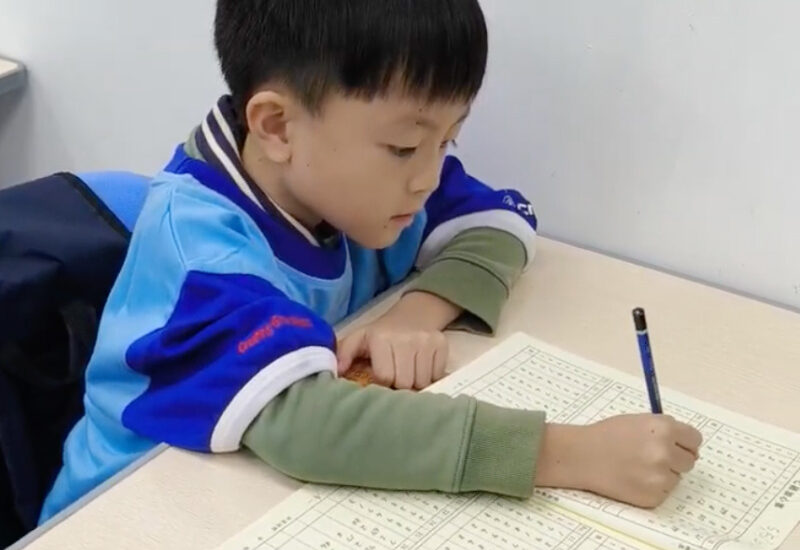
Every parent has watched their child struggle to sit still, zone out mid-conversation, or lose focus before finishing a task. It is easy to chalk this up to personality or age. But what many parents do not realise is that the ability to concentrate is not simply something children either have or do not have. Attention is a skill, and like most skills, it develops best when trained during the right period of a child’s growth.
How Attention Develops in the Growing Brain
The part of the brain most responsible for attention, focus, and self-control is the prefrontal cortex. This region sits at the front of the brain and governs a child’s ability to stay on task, filter out distractions, hold information in mind, and manage impulses.
What makes this relevant for parents is that the prefrontal cortex is one of the slowest parts of the brain to fully mature. It continues developing well into early adulthood. However, the period between roughly 3 and 12 years old represents the most active phase of growth for this region. During these years, the brain is building and strengthening the neural connections that underpin focused thinking.
This is not a fixed or automatic process. Research in developmental science consistently shows that the quality of a child’s experiences during this window plays a meaningful role in how well these connections form. Children who receive structured, engaging cognitive input during these years tend to develop stronger and more sustained attention capacity over time.
What “Attention Training for Kids” Actually Means
When people talk about attention training for kids, they do not mean drilling children to sit quietly for longer. Genuine attention training involves giving a child tasks that require progressive mental effort, where they have to hold focus, process information actively, and respond with increasing accuracy over time.
Activities that involve multi-step sequences, working with patterns, or tracking and recalling information in real time are particularly effective at engaging the parts of the brain responsible for sustained attention. The key ingredient is consistency. Short, regular sessions of structured mental engagement over weeks and months produce far greater results than occasional intensive effort.
This is part of why programmes that run on a regular weekly schedule, with increasing levels of challenge built into the structure, are well suited to building attention in children during this developmental window.
Why the 3 to 12 Age Range Matters Specifically
Around age 3, children begin to develop what researchers describe as the early foundations of executive function. This includes very basic forms of attention control, such as being able to shift focus from one thing to another or hold a simple instruction in mind while completing a task.
Between the ages of 5 and 8, there is a notable acceleration in the development of sustained attention. Children become capable of maintaining focus on a single task for progressively longer periods, provided the task is appropriately stimulating. This is one reason why early primary school years are considered an important starting point for structured learning programmes.
By around age 10 to 12, many of the core attention-related pathways in the brain have become significantly more established. This does not mean development stops, but it does mean that the earlier years represent a particularly responsive period where consistent training has a compounding effect. Habits of focus built during this window tend to carry through into secondary school and beyond.
What Happens If This Window Is Not Used Well
Missing this developmental period does not mean a child cannot improve their attention later. It simply means that building these skills tends to require more effort as children get older, because the brain’s pathways have become less flexible over time.
Parents often begin noticing attention-related concerns when their child enters primary school and struggles to follow multi-step instructions, loses focus during lessons, or finds revision and homework particularly draining. While these challenges are addressable at any age, the earlier structured attention training begins, the more naturally it integrates into how a child learns.
The Role of Structured Learning Activities
Not all structured activities are equal when it comes to attention training for kids. Screen-based activities, even educational ones, tend to provide rapid stimulation that does not require sustained mental effort in the same way. The brain adapts to whatever inputs it receives most frequently, so children who spend more time on fast-paced passive content may find slower, more deliberate thinking tasks harder to sustain.
Activities that consistently require a child to hold information in mind, apply a learned method, and produce an output through active mental effort are far more effective at building the attention capacity that transfers to real-world learning.
Abacus mental arithmetic is one example of this kind of structured cognitive engagement. When children work with an abacus, they are simultaneously tracking numerical values, remembering sequences, applying a method, and visualising results. As they progress to performing calculations mentally without the physical tool, the demand on working memory and focused attention increases further. This progression across levels, from beginner to more advanced mental visualisation, is precisely what makes it an effective form of attention training over time.
CMA Singapore has been offering abacus mental arithmetic programmes for children starting from 3 years old, structured around the developmental stages of each age group. The programmes are designed to grow with the child, introducing progressively greater cognitive demand as their attention and mental capacity develops.
Final Thoughts
The years between 3 and 12 are not just about what your child learns. They are about how your child learns, and whether the mental foundations for focus, memory, and sustained thinking are being actively developed during the period when the brain is most ready to receive them.
Attention is not a fixed trait. It is a capability that can be built with the right kind of consistent, structured engagement. The earlier that process begins, the stronger the foundation your child carries forward.
Frequently Asked Questions (FAQ)
Q1: How long does it take for attention training to show results in children?
Most parents begin noticing gradual improvements in focus and task persistence within three to six months of consistent, regular practice. Results vary depending on the child’s age, starting point, and how frequently they engage with the structured activity. Sustained attention is a long-term development, not an overnight change.
Q2: What exactly is executive function and why does it matter for my child?
Executive function refers to a group of mental skills that help children plan, focus, remember instructions, and manage their behaviour. It underpins how effectively a child learns in school and handles everyday tasks. Strong executive function is associated with better academic performance, self-regulation, and problem-solving ability.
Q3: My child is already 10 years old. Is it too late to start attention training?
It is not too late. While the earlier years are the most responsive period for building attention, the brain retains the ability to develop these skills throughout childhood and beyond. Starting structured engagement at age 10 can still produce meaningful improvements in focus, memory, and learning habits, though progress may require more consistent effort over time.
Q4: How is abacus training different from other attention-building activities like reading or puzzles?
Abacus training uniquely combines numerical tracking, memory recall, sequential processing, and mental visualisation all within a single structured activity. While reading and puzzles are valuable, abacus training places a specific and progressive demand on working memory and focused attention simultaneously, making it particularly effective for building the type of sustained concentration that transfers to academic learning.
Q5: Can too much structured activity actually harm a young child’s development?
Yes, balance matters. Child development professionals generally agree that unstructured free play is equally important for creativity, emotional development, and social skills. The goal is not to fill every hour with structured programmes but to include regular, age-appropriate cognitive engagement alongside sufficient time for rest and play.